How to Get Your Music on TikTok: A Complete Guide
To get your music on TikTok as a usable sound, you need to distribute your track through a music distributor that delivers to TikTok and CapCut's sound libraries — this is separate from simply posting a video with your song playing in it. Once delivered, your track becomes searchable as a sound that any TikTok user can attach to their own videos, which is how songs actually go viral on the platform.
Many artists confuse "having my song on TikTok" with "posting videos that use my song." They're different. This guide covers how to properly get your track into TikTok's sound library, how royalties work when people use your sound, and what actually drives songs to catch on once they're there.
Two Ways Your Music Ends Up on TikTok
1. As a Searchable Sound (via Distribution)
This is what most artists actually want. When your distributor delivers your release to TikTok, your track becomes available in TikTok's sound library — the same library users browse when adding music to their own videos. This is what enables a 15-30 second clip of your song to be picked up and used by hundreds or thousands of other creators, which is the core mechanic behind TikTok-driven virality.
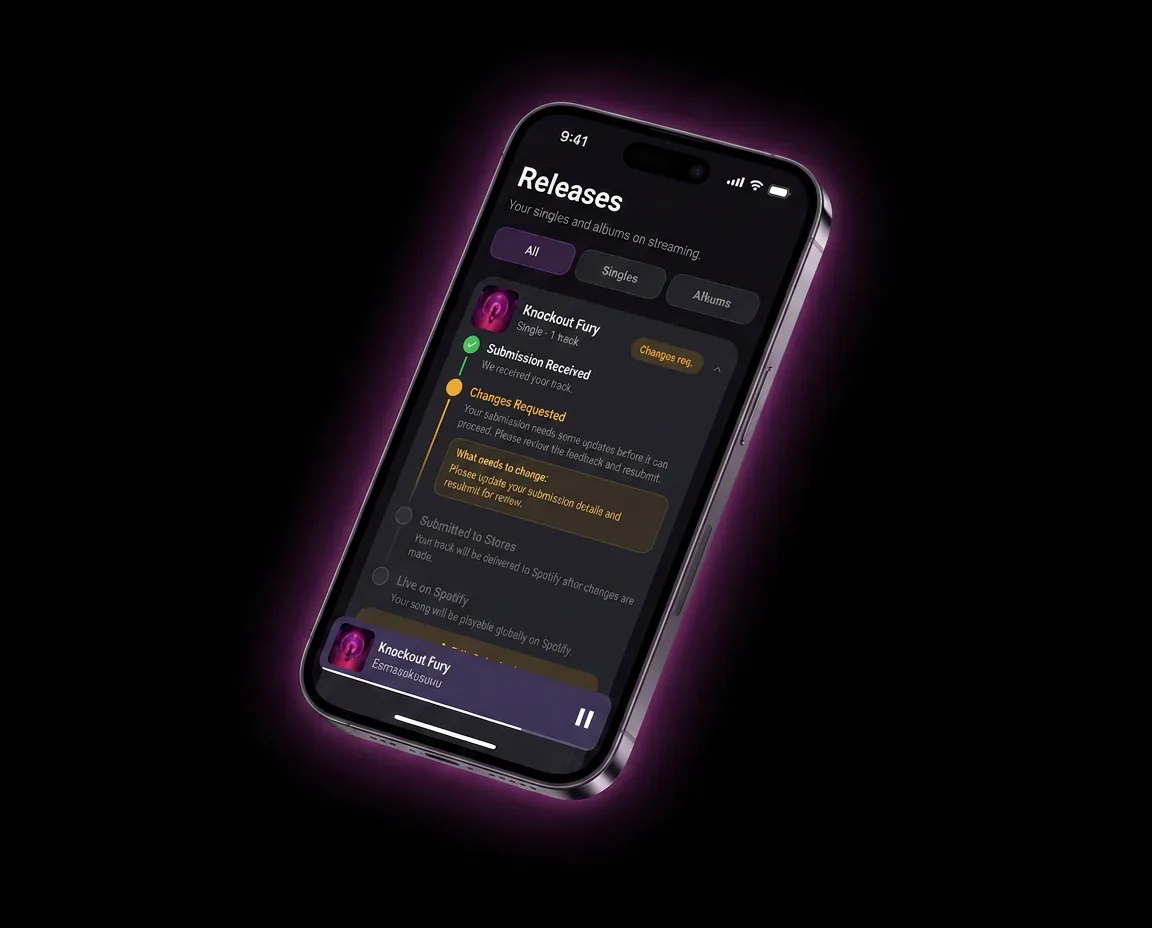
Banger includes TikTok (and CapCut) as a distribution destination, so when you release a track, it's automatically eligible to be used as a sound, without any separate submission process.
2. As Background Audio in Your Own Posts
You can also just post videos to your own TikTok account with your music playing — this doesn't require distribution, since it's your own content on your own channel. But this only gets your song heard by your own audience; it doesn't make your song available as a sound that other creators can pick up and attach to their own videos, which is where most organic discovery actually happens.
For real reach, you want both: your own content posted consistently, and your track properly distributed so it exists as a usable sound in the library.
How TikTok Sounds Actually Work
When your song is delivered to TikTok's library:
- Any user can select a clip of your track (TikTok/CapCut let creators pick which section becomes the sound) and attach it to their own video.
- Your song is tagged with your artist name, and users can tap through to see other videos using the same sound.
- If your song catches on with even a handful of creators, TikTok's recommendation algorithm can push those videos — and by extension your sound — to a much larger audience.
- A trending sound on TikTok frequently drives direct search spikes on Spotify and Apple Music, since viewers who like a sound often go looking for the full song.
This is why many labels and independent artists now treat a TikTok moment as a primary discovery engine, sometimes ahead of playlisting.
How Royalties Work on TikTok
TikTok pays royalties for the use of your music, generally through licensing agreements it holds with distributors, labels, and rights organizations rather than paying artists individually per use. As an independent artist, your distributor is what makes you eligible to receive a share of that royalty pool when your song is used as a sound. This is a general model — exact payout structures and rates aren't publicly itemized in a way that can be quoted precisely, so treat any specific per-use dollar figure you see online with skepticism.
To actually collect these royalties, your track needs to be properly distributed with correct metadata and, ideally, your songwriter and publishing information registered — since TikTok usage can trigger both recording-side and composition-side royalties. See music publishing 101 and music copyright 101 for the underlying structure of how these two royalty streams work.
What You Need Before Distributing to TikTok
- A finished, mastered audio file — same requirement as any other platform.
- Cover art meeting standard platform specs (square, high resolution, no embedded text/URLs). See the album cover art guide.
- An ISRC code for tracking and royalty attribution — generated automatically through most distributors, including Banger. See what is an ISRC code.
- Accurate metadata, especially artist name spelled consistently, since this is what appears when users tap into your sound.
- Clean rights if your track involves a sample or cover — TikTok's Content ID-style detection can flag or mute unlicensed content. See how to license a cover song and beat licensing and sampling 101 if relevant.
Step-by-Step: Getting Your Music on TikTok
- Master your track and export a final WAV file.
- Prepare cover art to spec.
- Distribute through Banger, selecting TikTok/CapCut as one of your delivery destinations alongside streaming platforms like Spotify and Apple Music.
- Submit with lead time — ideally several weeks before you plan to push the sound, so it's live and searchable before you start promoting.
- Identify your "hook" moment — the 15-30 second segment of your song most likely to catch on as a standalone clip. This matters because TikTok users interact with a specific clip, not your full track.
- Seed the sound yourself. Post your own videos using the sound first, since a sound needs some initial usage before organic pickup is likely.
- Reach out to creators in your genre or niche who might naturally use trending sounds, or run a light TikTok promotion tied to a challenge, dance, or trend format.
- Track performance and, if a clip starts gaining traction, lean into it with more content using the same sound rather than switching to a new one immediately.
Promotion Tactics That Actually Work
- Post consistently, not sporadically. TikTok rewards accounts that post regularly with more consistent reach.
- Use the same sound across multiple of your own videos early on to help seed usage before asking others to pick it up.
- Time your TikTok push around your official release so a spike in TikTok usage converts into DSP streams while your release is fresh. See how to upload music to Spotify and how to get your first 1,000 streams on Spotify.
- Engage with creators using your sound — commenting, dueting, or resharing their content builds momentum and signals relevance to the algorithm.
- Don't over-explain the song in captions. Let the sound and visual carry the moment; TikTok users respond to authenticity over polish.
- For a broader promotional framework beyond TikTok alone, see music marketing strategies.
How Banger Makes This Easier
Banger distributes your music to TikTok and CapCut as part of standard release delivery, so you don't need a separate submission process to make your track usable as a sound. built-in promo tools like pre-save links helps ensure your metadata and ISRC are correctly attached so you're properly credited — and paid — when your sound gets picked up. Pricing is $24.99/year.
FAQ
Do I need a distributor to put my music on TikTok?
Yes, if you want your track to be a searchable sound that other users can attach to their own videos. You can post your own content with your music playing without a distributor, but that only reaches your existing audience and doesn't create a usable sound in TikTok's library.
How long does it take for a song to appear as a TikTok sound after distribution?
This varies by distributor, but it generally follows a similar timeline to other platforms — typically a matter of days once your release is submitted and processed. Submitting with several weeks of lead time before you plan to actively promote the sound is a safer approach.
Do I get paid when people use my song on TikTok?
Yes, generally — TikTok licenses music through agreements with distributors, labels, and rights organizations, and a share of that royalty pool flows back to artists whose songs are used as sounds. Being properly distributed with accurate metadata is what makes you eligible to receive this.
How do I make my song go viral on TikTok?
There's no guaranteed formula, but songs that catch on typically have a strong, short "hook" moment, get seeded through the artist's own consistent posting, and align with a trend, challenge, or relatable format. Reach out to creators in your niche and keep posting with the same sound once it shows early signs of traction.
What's the difference between TikTok and the TikTok Commercial Music Library?
The standard TikTok sound library is what independent artists' distributed music enters, available for personal, non-commercial video use. The TikTok Commercial Music Library is a separate, business-licensed catalog intended for brands and business accounts to legally use music in commercial/promotional content — it's a different licensing track from artist distribution.
Can I use my TikTok success to grow on other platforms?
Yes — a trending TikTok sound frequently drives listeners to search for the full track on Spotify, Apple Music, and YouTube Music. Make sure your song is fully distributed everywhere before or as you push a TikTok promotion, so that traffic has somewhere to convert. See how to upload music to YouTube Music as another destination worth having ready.
Get Your Music on TikTok
Don't miss out on TikTok's discovery potential because your track isn't properly distributed. Banger delivers your music to TikTok, CapCut, and every major streaming platform from one upload. [Get started at SIGNUP_URL].